
White Sharks Under Threat in South Africa
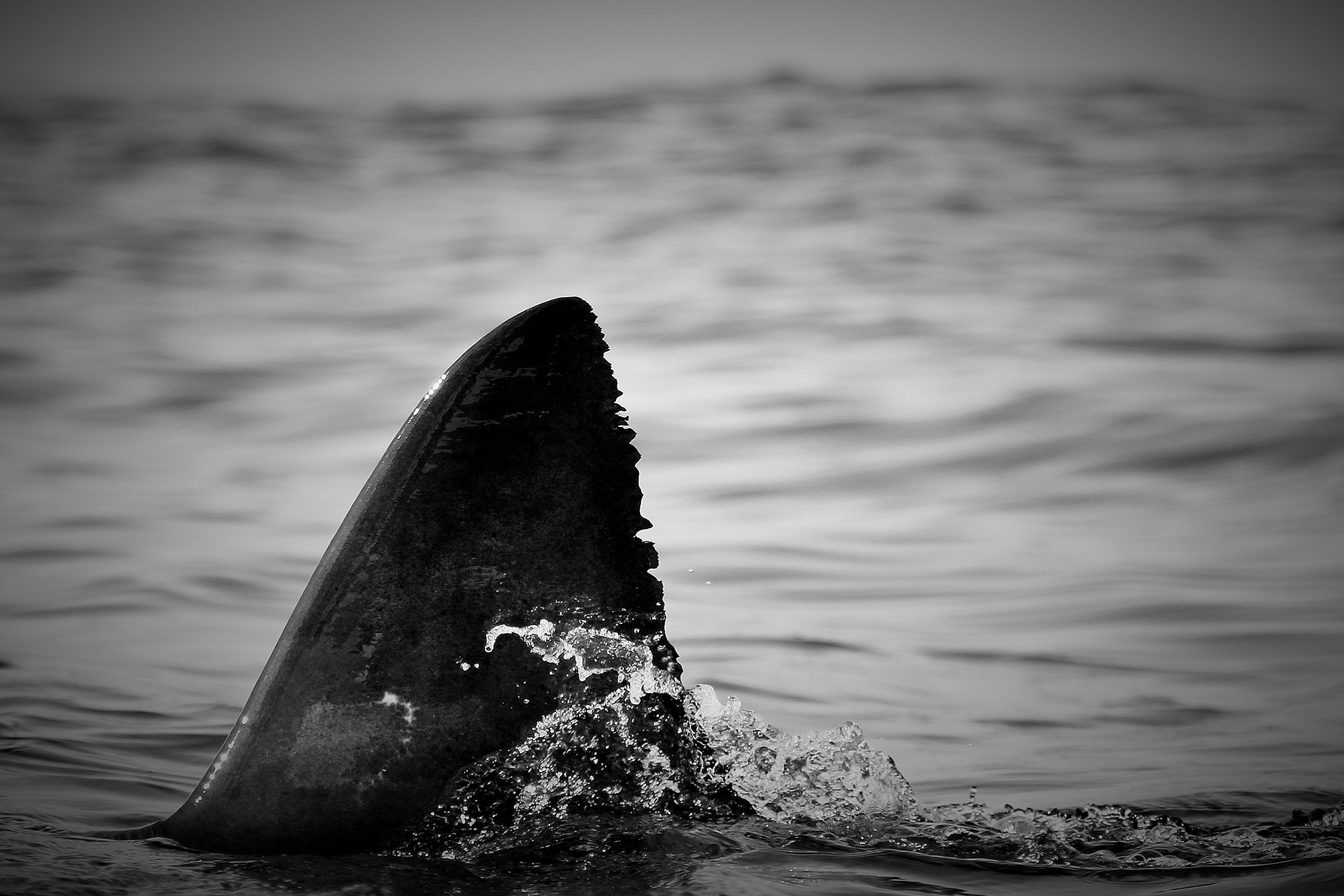
‘Dawn Patrol’ by © Dan Callister/Penguins & Sharks
South Africa was the first country to protect Great White Sharks Carcharodon carcharias - an important decision taken despite limited data on population status, but guided by a precautionary approach in recognition of the species’ ecological and economic value. Unfortunately, several lines of evidence suggest an ongoing population reduction, including declines in sightings from aggregation sites in the last decade (especially of large mature individuals), low genetic diversity, and low effective population size. Simulation modelling indicated that current levels of white shark removals by South Africa’s lethal shark control program are alone unsustainable and sufficient to drive population decline. This has led to growing calls for further conservation actions. Nevertheless, a recent study has claimed that this population has remained stable since 1991 and likely redistributed eastward due to the predatory effects of orcas. On this basis, no additional conservation management action has yet been taken. Here, we synthesize several lines of historical and newly acquired information to argue that this white shark population is more likely in decline. While predator-prey dynamics are natural phenomena, anthropogenic threats (i.e. the lethal shark control program and demersal shark fishery) are subject to management. We recognize that management must balance public safety, community livelihoods, and conservation goals. However, consistent with the country’s history of applying a precautionary approach and its commitments to existing national and international frameworks, we urge the South African government to reduce anthropogenic sources of white shark mortality, to conserve this population and its attendant ecosystem services that South Africans depend upon….
Please read more here